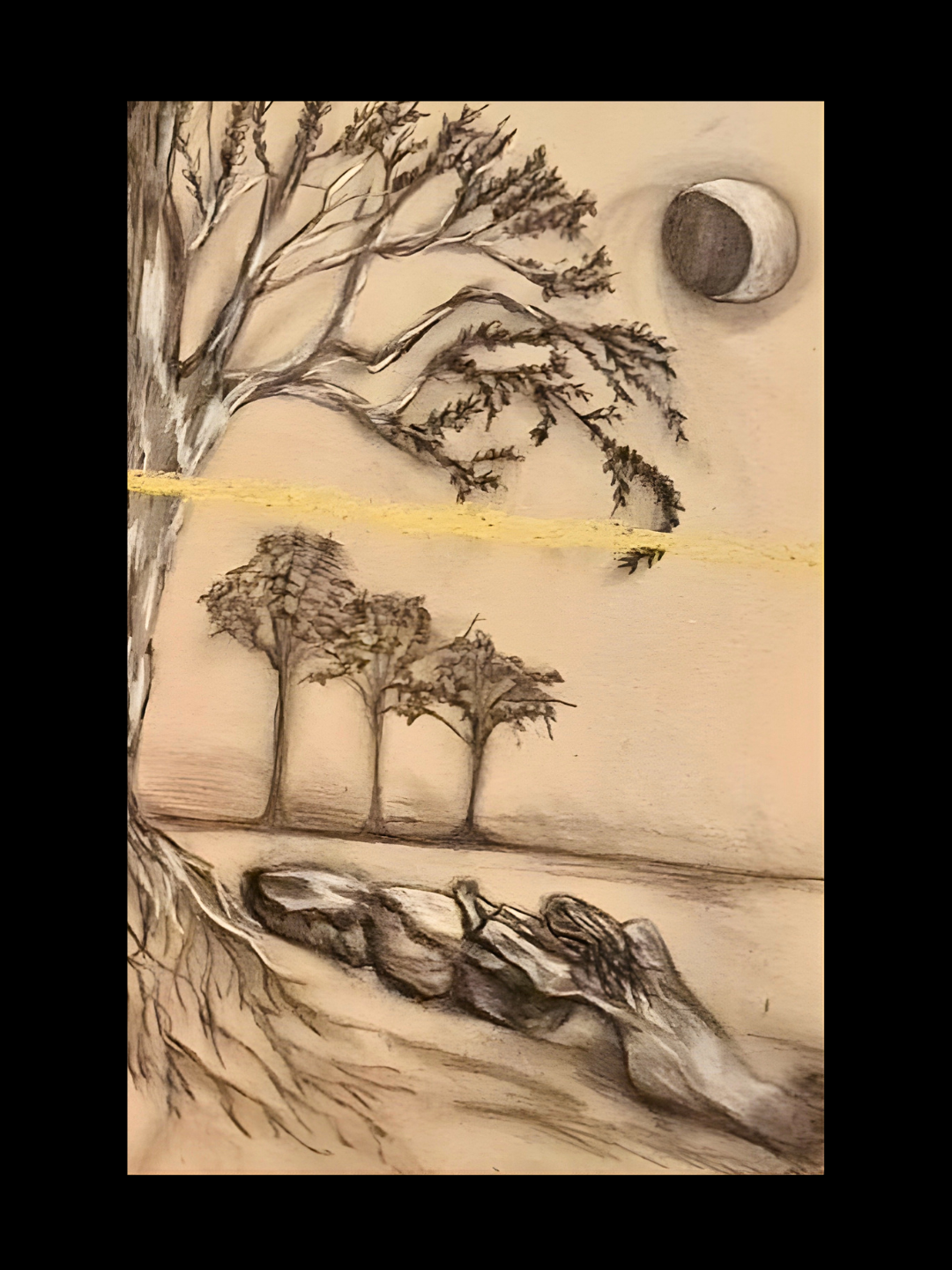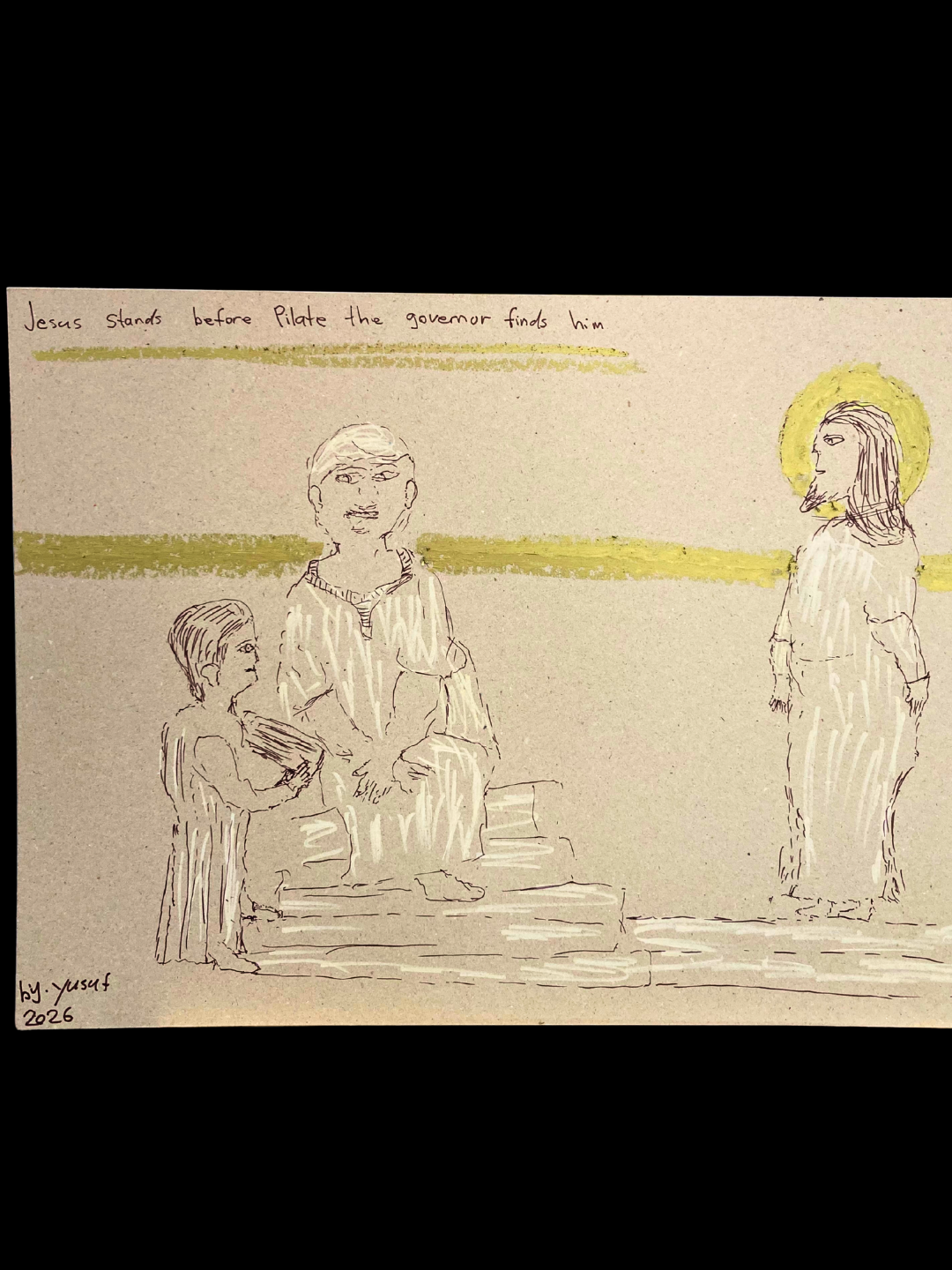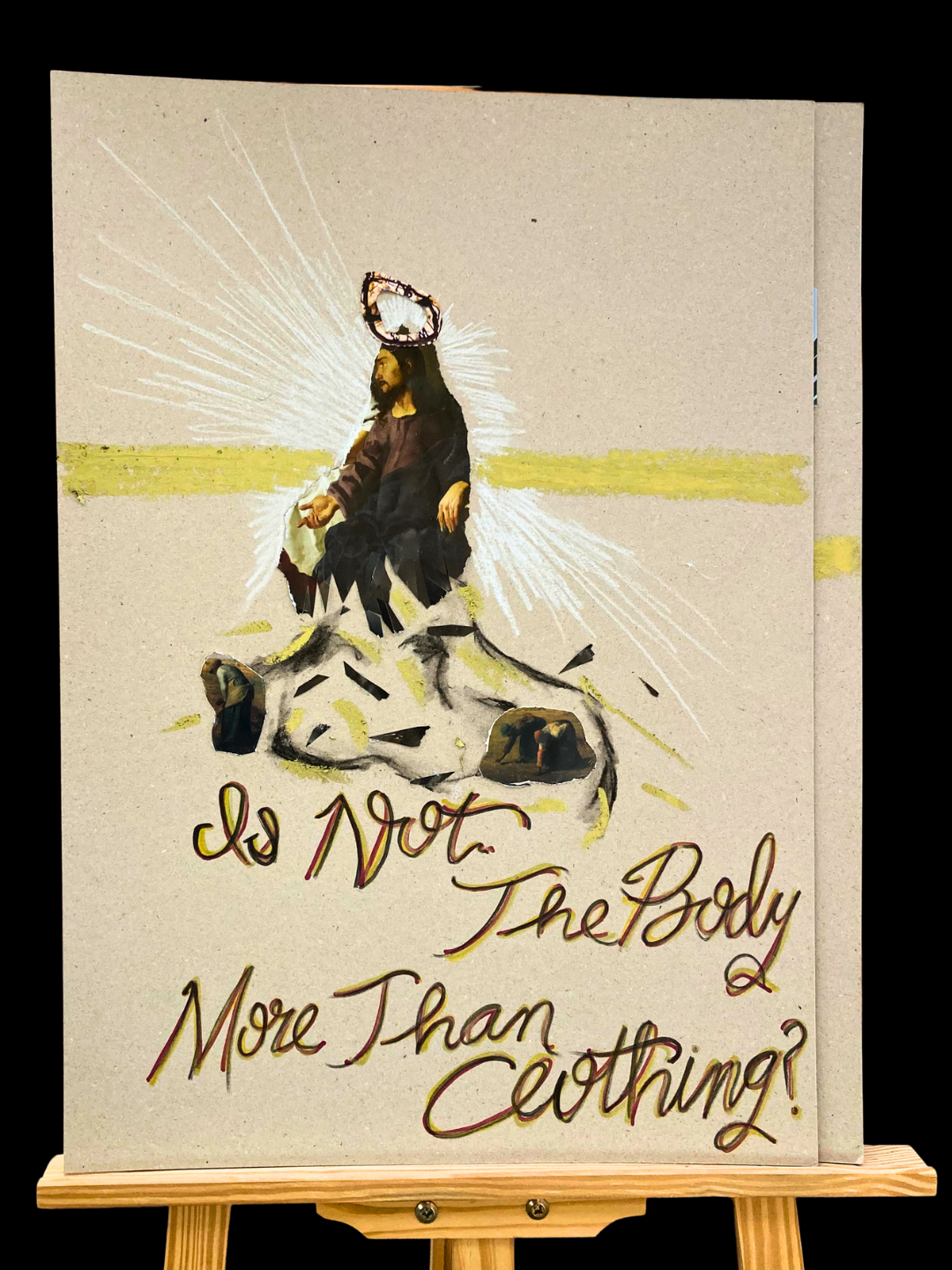
During Lent 2026, the people of St. George’s created a community‑made Stations of the Cross exploring the movement from the Table to the Tree—from fellowship with Jesus to the vulnerability of his Passion. Inspired by our Lent course, Coming to the Table, this project invited the community to reflect on how God meets us both in everyday hospitality and in places of suffering, loss, and new hope.
Different groups within the church: Children’s Church, the Wellbeing Café, Made by St. George’s Craft Group, and an all‑church art session—created these twelve large‑scale artworks. Together, the works form a single visual and spiritual journey through Jesus’ final hours.
Q&A’s
-
The Stations of the Cross is an ancient Christian devotion that traces Jesus’ final journey: from Gethsemane, through his trial and suffering, to his death on the cross. Traditionally prayed during Lent and Holy Week, the Stations invite us to walk slowly with Christ, pausing at each moment of the Passion to reflect, pray, and open ourselves to God’s compassion.
In churches around the world, the Stations are often represented by artwork placed around the building. Moving from one Station to the next mirrors the physical journey Jesus made and helps us enter the story with our bodies as well as our hearts and minds. Each Station becomes a place where we can bring our own joys, wounds, hopes, and questions into the presence of God.
For more information on the Stations of the Cross, visit the Church of England’s dedicated resource page.
-
In every Station, two visual motifs appear:
The Table
Each station will feature a simple horizontal gold line, symbolising welcome, belonging, nourishment, and the presence of God in ordinary life. This is also an allusion to the Last Supper, the Passover meal Jesus shared with His disciples the night before the world betrayed Him (Luke 22:19–20; Matthew 26:26–28; Mark 14:22–24; 1 Corinthians 11:23–25).
The Tree
Two of the main mediums we will employ are charcoal and graphite. Both create an effect resembling wood grain, expressing the weight of the cross, the cost of love, and the unfolding vulnerability of Jesus’ path.